- calendar_today August 31, 2025
WhatsApp has finally dipped its toe into the ad waters. The world’s most popular messaging service will now be littered with advertising. However, don’t expect them to be right in your inbox. The company is launching its first ad-supported services — in an area of the app that few people use.
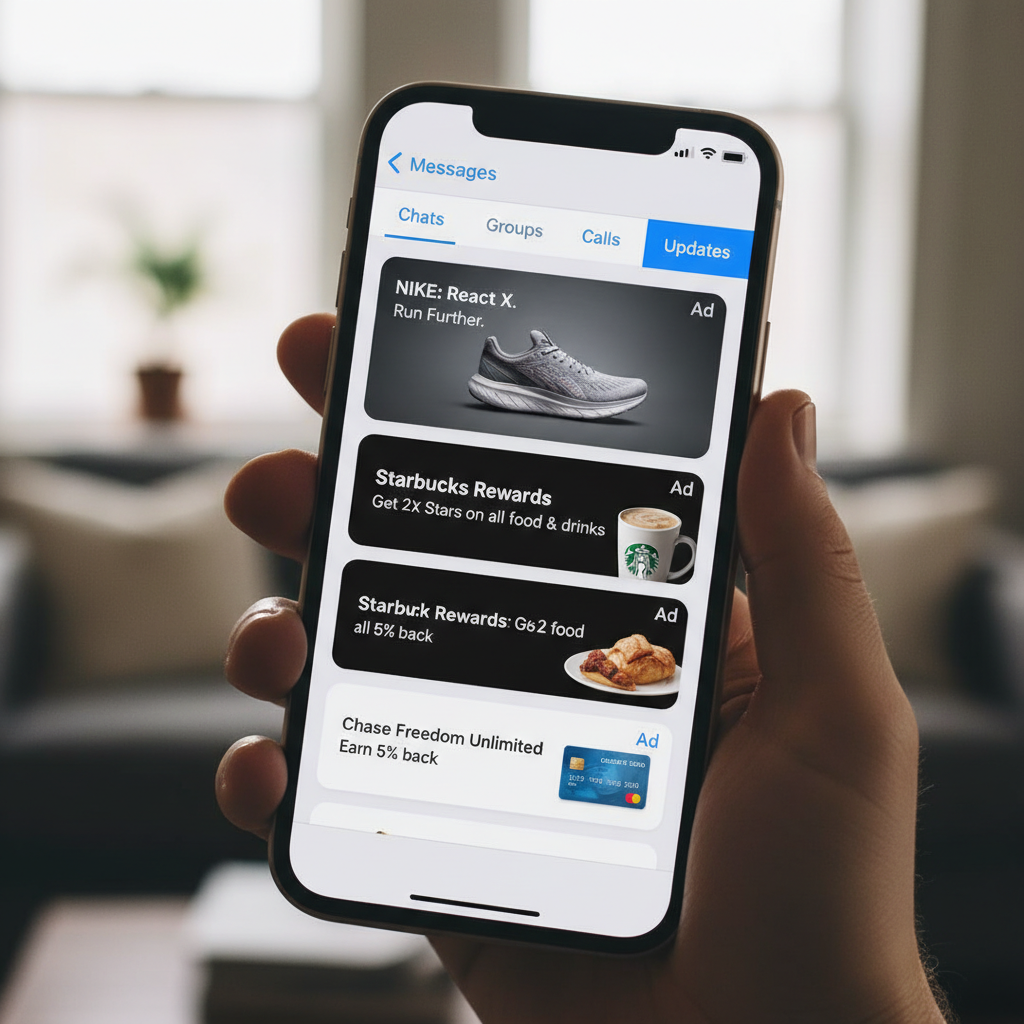
It’s the Updates tab. If you’ve used WhatsApp, you might know this as a place where people share fleeting status updates and follow other “Channels” dedicated to specific interests. For years, WhatsApp has toyed with ads in this area — but this is the first time they’re launching them for real.
“The largest and fastest-growing audience in the world”
Ads are appearing in the Updates tab in a new section called “ads.” These ads won’t pop up in your chats. You’ll still have to be in the Updates tab. (Just as you always have.) Meta assures that the ads won’t be any closer to your chat history than before.
If you only use WhatsApp to talk to friends or in group chats, you might not even notice this change. But if you often look at the Updates tab, things are about to get a little bit more commercial.
Meta says that over 1.5 billion people use the Updates tab every day. It’s a huge audience — and one that advertisers will be eager to tap into. The company is being cautious about how it deploys these ads.
There are three new ad formats. First, Status ads. These will show up next to the photos, videos, and messages from your friends and followers. It’s basically the same thing as an Instagram Story ad. As you scroll through your friends’ statuses, you might see a photo, video, or message from a brand or business. You can respond to these ads, which opens up a direct conversation with the advertiser.
Second, Meta is launching Promoted Channels. That means channel admins and businesses can pay to boost their content in the app. Channels will show up more often, and can expand their reach in WhatsApp itself — without needing to rely on an external platform.
Third, and most importantly, WhatsApp is now letting businesses and creators charge for their exclusive updates. A user can subscribe to a cooking channel and get access to premium recipes or early content drops. It’s a way for businesses to make money — and a way for WhatsApp to generate revenue.
Which is important. WhatsApp has made most of its money through the Business Platform — a paid tool that lets businesses connect with their customers. But it’s also been selling click-to-WhatsApp ads on Facebook and Instagram. Meta CEO Mark Zuckerberg said that he wanted to go further, and that the Business Platform was growing. There’s room for more, though, and this is part of that plan.
In an investor call earlier this year, Alice Newton Rex, the vice president of product at WhatsApp, described this move as the “next natural evolution.” She said that businesses have asked for more ways to grow their audiences within WhatsApp, and this is the company’s response to that need.
None of this is simple. WhatsApp, after all, has been defined by its reputation for privacy. When people open WhatsApp, they want to talk to their friends and family — not to advertisers.
Meta knows that. The company’s product head told The Verge that they’ve “had years to plan” for this. Meta isn’t opening this space up all at once. Instead, the ads are rolling out slowly. Ads will appear in a very specific place — the Updates tab.
You won’t see these ads in your private chats. Instead, they’ll show up in the section where people post temporary updates and follow “Channels” about specific interests. Meta says that there’s more than 200 million active Status accounts and 100 million active Channels.
And this is a “majority” of WhatsApp users. Meta tells The Verge that over 90% of users log in to WhatsApp daily, and that more than 50% use the Updates tab daily. Meta says that users have expressed interest in this area — they want new content and they want to connect with their favorite brands.
The company will start testing a number of ads in different formats. WhatsApp plans to focus on how users are interacting with the Updates tab — for example, whether they follow a channel and which content they like.
Users will also be able to see which types of content they’ve seen and opt out of seeing it again. This, in part, will help them hide content from certain brands or businesses. Meta says it’s trying to make the experience as controlled as possible for users.
If you’re already worried about how this will affect your WhatsApp experience, don’t be. For most people, it won’t matter.
For now, the update is minimal. For the rest of us, it marks the beginning of a new chapter for WhatsApp. The ads have finally arrived. And while they may only appear in the Updates tab for now, it’s clear that Meta is preparing for something bigger.