- calendar_today August 7, 2025
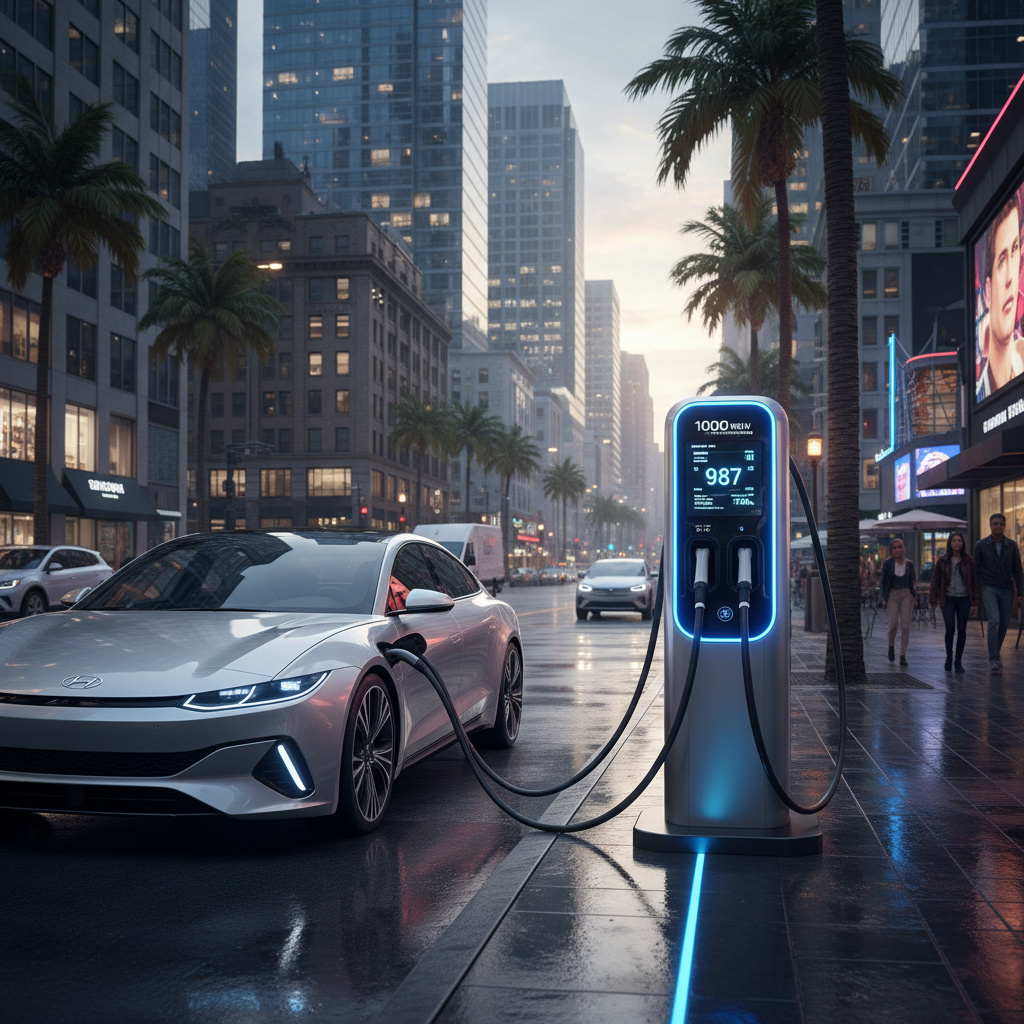
The electric vehicle industry faces a transformative change as BYD, the top-selling EV company worldwide, launches its innovative “super e-platform.” The new system uses 10C charging capacity and 1,000 kW DC chargers to significantly shorten EV charging periods to levels comparable with traditional gasoline refueling. This development directly addresses one of the most significant barriers to widespread EV adoption: the persistent concern over lengthy charging periods.
BYD has achieved remarkable innovation by enabling a vehicle to gain 249 miles (400 km) of range within just five minutes of charging. The new achievement surpasses existing industry benchmarks since Tesla Superchargers provide 250 kW while Electrify America offers 350 kW and Formula E delivers only 600 kW for high-speed charging. BYD chairperson Wang Chuanfu stated that the company aims to make electric vehicle charging as quick as fueling a gasoline car.
The “super e-platform” utilizes batteries that support charging at 10C rates which enables full battery charging within 6 minutes under best conditions. The combination of 1,000 kW DC chargers enables this technology to deliver energy quickly which leads to much shorter charging durations. BYD intends to install more than 4,000 megawatt chargers throughout China to facilitate the charging needs of its latest electric vehicles including the Han L sedan and Tang L SUV.
The worldwide market environment demonstrates intricate and multifaceted characteristics. BYD’s market expansion continues across Europe but political challenges prevent it from entering the US market. Both Democrat and Republican Congress members have raised national security and economic competition concerns resulting in attempts to limit Chinese EV companies’ access to the US market. The differences between range estimation standards must be recognized as essential. BYD’s 249-mile range number follows the CLTC (China Light-Duty Vehicle Test Cycle) standard because it allows more optimistic results than the US EPA (Environmental Protection Agency) testing standard. When tested according to EPA standards the attainable range will probably show reduced values.
Licensing BYD’s advanced technology presents a feasible solution for U.S. automakers to proceed despite the current obstacles they face. American car manufacturers can speed up the implementation of quick charging standards through licensing agreements which will also break down political barriers and increase rapid charging access for more consumers. The practical performance of this technology depends on multiple factors such as battery temperature, state of charge, and infrastructure quality. The efficiency of a vehicle which is represented by kilometers per kilowatt-hour (km/kWh) determines its ability to transform electric energy into driving distance.
BYD’s innovative “super e-platform” represents a groundbreaking development in EV charging technology that addresses a primary obstacle to electric vehicle adoption which is lengthy charging durations. As the company expands its charging network throughout China it reinforces its status as an EV market leader and establishes a foundation for transforming electric transportation’s future. BYD’s ongoing technology development and infrastructure expansion will establish a new electric mobility landscape where EV charging becomes as fast and easy as gasoline refueling.
The implementation of rapid-charging technology on a large scale may drive automakers to compete more intensely which will push them to enhance their electric vehicle platforms through innovation. The ongoing technological competition stands to produce batteries with enhanced efficiency while boosting vehicle range and expanding worldwide access to fast-charging stations. Accelerating EV charging solutions such as BYD’s adoption would serve consumers while simultaneously advancing sustainable transportation systems as nations strive to reduce carbon emissions. Licensing agreements present opportunities that can facilitate worldwide adoption of electric vehicles and make sustainable travel both more attractive and practical.