- calendar_today August 12, 2025
REGINA —
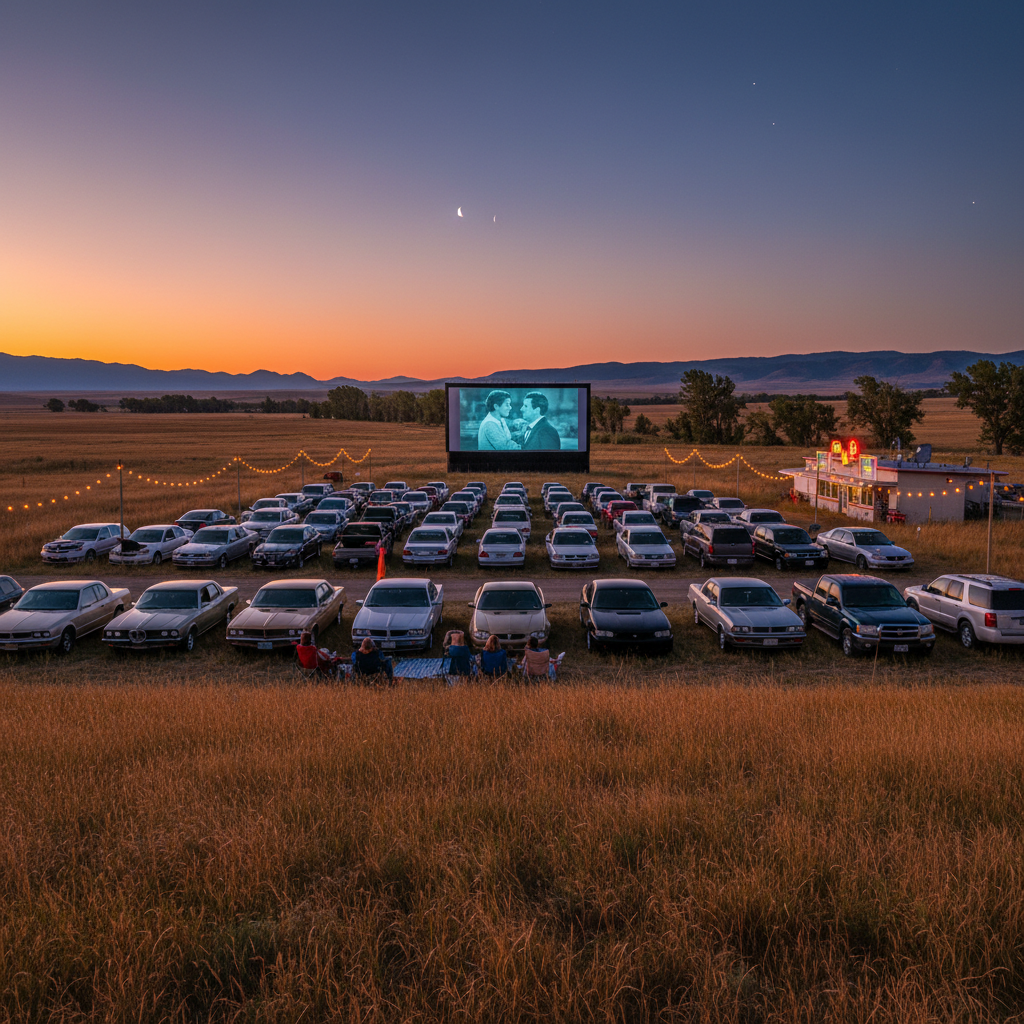
In the land where the sky seems to go on forever, a thin beam of light cuts across the horizon. Cars settle in rows on the edge of a wheat field. The sun slips below the flat line of the earth, and the first frame appears on the glowing screen. For a moment, everything feels suspended — the kind of stillness that only Saskatchewan can hold.
In 2025, drive-in theaters have returned to this province that understands space better than almost anywhere. Out here, where sound travels for miles and the stars outnumber the people, a simple evening at the movies feels like ceremony.
A Revival Rooted in Community
The first to reopen was The Wheatland Drive-In near Moose Jaw — rebuilt by a local couple, the Frasers, who found the old metal frame buried behind a barn. “We thought it’d be a one-night thing,” says owner Tom Fraser. “But after that, people wouldn’t let us stop.”
By midsummer, the idea had spread across the province. Pop-up drive-ins appeared in Yorkton, Estevan, and Swift Current. In Saskatoon, a group of university students hosted weekly screenings by the riverbank — sometimes projecting films onto the side of an old grain elevator.
“There’s something beautiful about seeing a story on a surface that’s seen so much history,” says film student Mia Thompson. “You’re watching light on memory.”
The Sky That Holds Everything
Saskatchewan’s drive-ins don’t need elaborate backdrops — the prairie sky does the work. Even after sunset, the light lingers in wide bands of violet and blue. The air smells faintly of dust, rain, and alfalfa. Every sound — a door closing, a laugh, a radio crackle — feels magnified against the vast quiet.
Families sit in truck beds, legs dangling. Teenagers share hoodies and jokes. Someone brings bannock and chili. Someone else tunes the radio too loud, then turns it down and smiles apologetically. It’s imperfect, casual, utterly human.
As the film begins, the prairie wind moves through the rows like a gentle tide. You can hear the dialogue from another car, a dog barking miles away, and the low hum of night insects gathering in the light.
Old Traditions, New Light
Saskatchewan’s 2025 drive-in revival has found balance between tradition and innovation:
- Solar-powered projectors that stay bright through long twilight hours
- Homemade snacks from local vendors — honey popcorn, bison jerky, rhubarb pie
- Short documentaries by regional filmmakers, screened before each feature
- Cash donations collected in coffee tins, passed between cars like a handshake
At Prairie Sky Cinema near Prince Albert, the owner plays a short film before every show — clips of wheat harvests, curling tournaments, and community parades from decades past. “People cheer for them like they’re watching old friends,” he says.
It’s nostalgia, but not the sugary kind. It’s the grounded sort — a remembering of rhythm, of faces, of the way light falls on the land just before night fully arrives.
Silence as a Shared Language
When the movie plays, conversation fades. The wind steadies. The prairie becomes a single listening ear. Children curl up in the backseat. Adults lean into the stillness. No one checks the time.
There’s a sense that these gatherings mean something deeper — not just entertainment, but the reaffirmation of who the people here are: patient, kind, quietly proud.
“Out here,” says Regina local John Epp, “you learn that silence isn’t emptiness. It’s company.”
When the Night Ends
When the credits roll, no one rushes. The screen dims, but the stars flare bright — clear and countless. The air feels cooler, almost weightless. Engines start one by one, red taillights threading along the highway like embers drifting through the dark.
The field empties slowly. A few volunteers stay behind to pick up trash. The last car leaves. The prairie returns to quiet.
But the light remains — in memory, in conversation, in the way people now wave a little longer at gas stations or grocery stores, as if they all shared a secret.
That’s what Saskatchewan’s drive-in revival has brought back: the soft, steady understanding that belonging doesn’t need sound. It only needs space — and a sky big enough to hold it.
So if you ever see that faint glow on the horizon, don’t mistake it for a distant storm.
It’s something gentler.
It’s the province remembering its heartbeat, one film at a time.