- calendar_today August 20, 2025
.
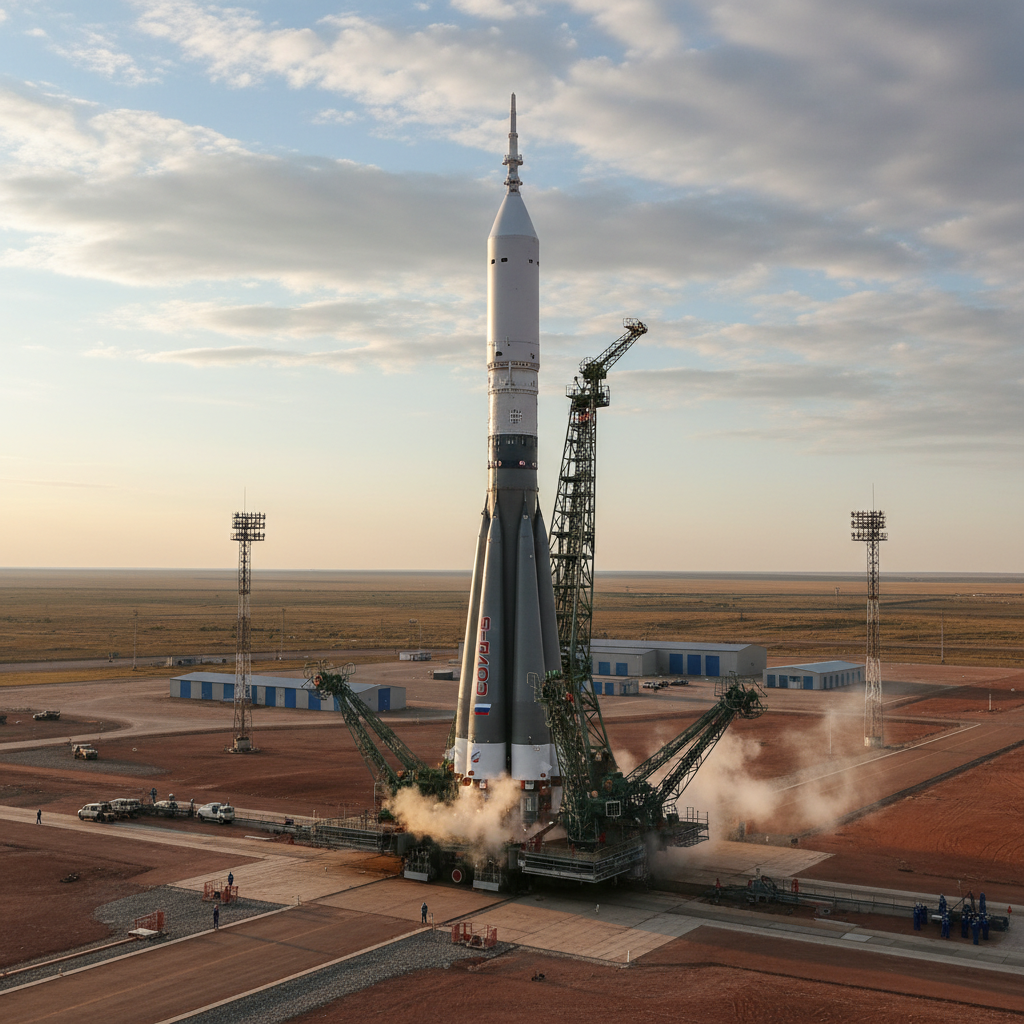
Russia plans to put its newest rocket, Soyuz-5, into service before the end of this year. The statement was made by Dmitry Bakanov, director of Roscosmos, in a recent interview with state news agency TASS.
“Yes, this is planned for December,” he said, when asked about the new rocket. “The preparation for the first launch is practically completed,” he added. The rocket would fly from Baikonur spaceport in Kazakhstan, so a successful launch would mark the debut test flight of a vehicle that has been under development for more than a decade. Roscosmos has suggested several trial launches, but the rocket is not expected to enter full service until 2028.
Soyuz-5, also known as Irtysh, is not an original design. Instead, the rocket builds on the Zenit-2 rocket, a platform that has been around since the 1980s and was originally designed at Ukraine’s Yuzhnoye Design Bureau. Zenit rockets were manufactured in Ukraine but used engines developed by Russia called RD-171s. In that respect, the Zenit was a hallmark of post-Soviet space cooperation between the two countries. That partnership ended when Russia invaded Ukraine in 2022. Russian forces attacked the Ukrainian plant that built Zenit rockets in late 2023.
Soyuz-5 is a version of Zenit that is larger and made in Russia. The redesign has removed Ukraine from the equation, while also ensuring all critical hardware is made in Russia. For Moscow, that is a win, since it breaks years of reliance on a foreign partner and also phases out the older Proton-M launcher in the process.
Bridge to the Future
Technically, Soyuz-5 can be considered a medium-lift rocket. The vehicle can deliver roughly 17 metric tons of payload to low-Earth orbit. The increased performance is a result of larger propellant tanks compared to the Zenit. At the heart of the rocket are the RD-171MV engines, which are the newest entry in a long-running family of engines.
The design was originally developed for the Energia program of the 1980s, which was used to launch the Soviet Union’s ultimately short-lived space shuttle Buran. The newest RD-171MV version is important for one reason: it does not use any Ukrainian components. The engine uses kerosene and liquid oxygen as propellants, and produces more than three times the thrust generated by NASA’s Space Shuttle main engine. It is the most powerful liquid-fueled rocket engine in operation today.
Despite that, the Soyuz-5 rocket is expendable, which makes it an outlier among its newer competitors. Prominently, SpaceX’s Falcon 9 is also a medium-lift rocket, but it is designed to be reusable. This difference also calls into question whether Soyuz-5 has any chance to take a meaningful slice of the international launch market.
Nonetheless, the rocket has an important role for Roscosmos. War expenses and international sanctions have restricted funding, while the development of a completely new reusable rocket has proven difficult. The Amur project, also known as Soyuz-7, was supposed to plug that gap. Designed with a reusable first stage and methane-powered engines, Amur could one day be priced to compete with SpaceX. But constant delays have pushed its first flight back to 2030 or later.
In the meantime, Soyuz-5 is a stopgap. It ensures Russia can keep its space program alive, even if it only does so using technologies largely of the Soviet past.
Commercially, the picture is less clear. The international launch industry has changed a lot in the last decade, with providers like SpaceX and the Chinese lifting prices to new lows while also offering more flexibility. Russia has stuck with its Soyuz-2 rockets for crewed missions and the Angara family for heavier satellites and cargo, but neither has broken into the international market. It is unclear whether Soyuz-5 can change that pattern.
At the same time, it is also an achievement for Roscosmos that it has brought Soyuz-5 so close to launch under the current circumstances. A successful December launch would prove that Russia can still get new hardware ready for the pad despite sanctions and smaller budgets.
Soyuz-5 does not have to be the next big leap in rocket design. For Russia, however, it has both political and industrial importance. It is one step in the right direction, independence from foreign technology, and a bridge to an unknown future. That future may eventually be arrived with Amur, or some other next-generation rocket still on paper today.