- calendar_today August 18, 2025
G-Assist: More Gimmick Than Game-Changer?
As a dominant player in graphics technology, Nvidia is currently researching how AI can transform gaming experiences. Nvidia, which gained fame for its high-performance GPUs that produce impressive visual graphics, has now launched its experimental G-Assist AI feature.
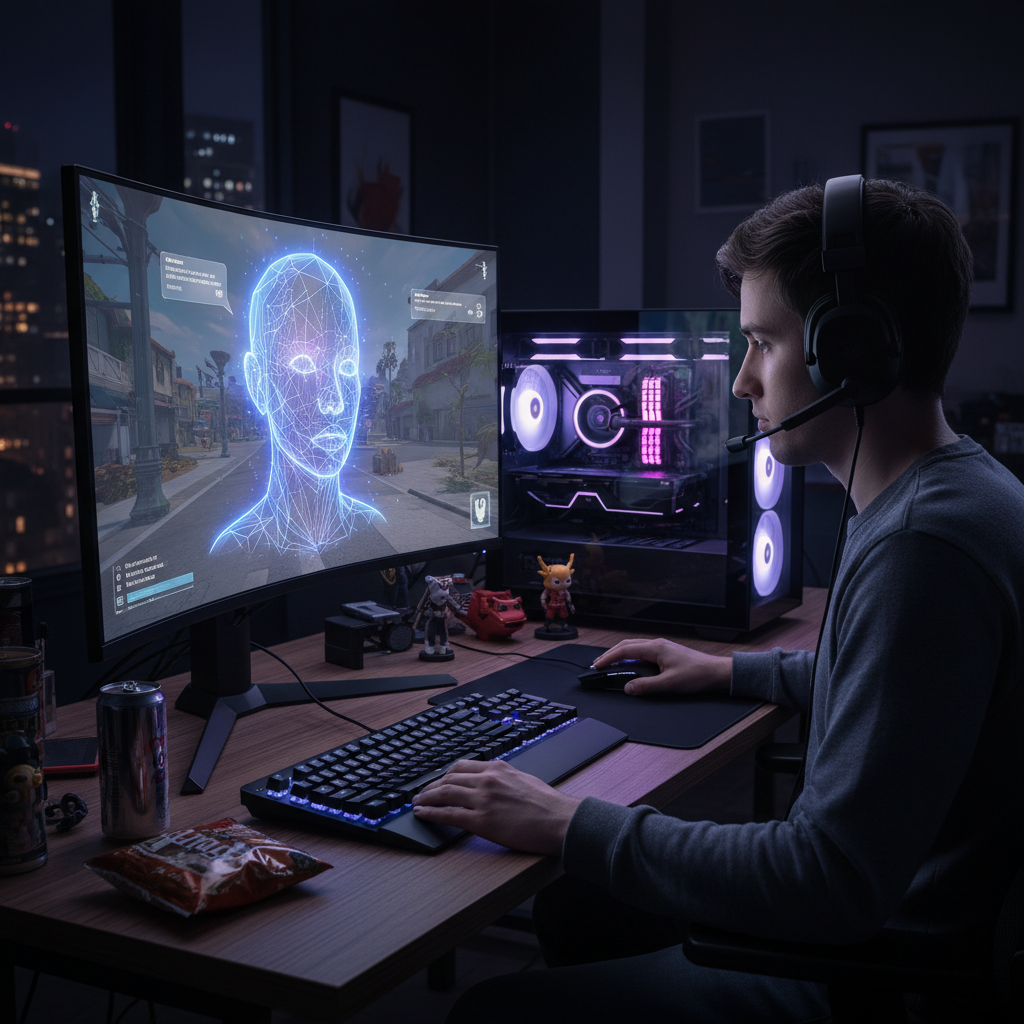
The locally run software optimizes computer performance and enhances gameplay through innovative methods while providing insights into future human-computer interaction models. The Nvidia desktop application’s on-screen overlay feature allows users to communicate with an AI assistant through text or voice commands, which extends control past standard system monitoring while possibly transforming gamer interaction with their technological setup.
G-Assist’s Core Functionalities
G-Assist delivers multiple interesting features which simplify the gaming experience for users. Users have the ability to ask broad inquiries like “How does DLSS Frame Generation work?”, and receive informative, AI-driven responses. The AI possesses capabilities to handle precise system-level configuration tasks. G-Assist enables gamers to access live system performance assessments along with real-time generated data charts that show detailed performance metrics.
The AI enables users to modify game settings and switch between different features for advanced automated optimization capabilities. G-Assist allows performance enthusiasts to overclock their GPUs while forecasting potential gains as it streamlines this usually intricate task.
The public release highlights several promising features, yet doesn’t achieve the level of integration demonstrated by last year’s G-Assist, which provided in-game support. This more immersive level of integration is presently limited to a small selection of titles, with Ark: Survival Evolved being a key example.
Nvidia expanded G-Assist capabilities through its third-party plug-in support system. The AI assistant can connect to devices from Logitech G, Corsair, MSI, and Nanoleaf to control thermal profiles and manage LED lighting while expanding its system management capabilities beyond basic settings.
System Requirements and Performance Analysis
Nvidia wants to showcase desktop systems with dedicated GPUs as powerful AI processors while the PC market transforms through the rise of “AI laptops.” Nvidia’s G-Assist differs from cloud-based AI tools by operating locally to utilize the processing capabilities of GeForce RTX graphics cards. G-Assist utilizes Nvidia’s small language model (SLM), which has been optimized for local processing to ensure quicker response times and improved privacy protection.
Users need 3GB storage for the basic text version but voice control requires an additional 3.5GB which results in a total requirement of 6.5GB. For operation of G-Assist your system must include a GeForce RTX 30, 40, or 50 series GPU with a minimum of 12GB VRAM capacity. System performance matches GPU strength and future versions will include laptop GPU support.
Choosing to process G-Assist on local GPU hardware provides benefits while introducing various difficulties. Local processing presents potential advantages through enhanced privacy features and latency reduction, which results in faster interactions. However, it also introduces performance considerations. The GPU utilization increased noticeably when interacting with G-Assist during tests on an RTX 4070.
Running inference, which produces AI responses, requires computation power that can interfere with ongoing tasks, especially when running high-performance games. The frame rate of Baldur’s Gate 3 at its highest graphical settings fell by 20% during G-Assist processing. G-Assist could deepen performance bottlenecks in systems that are already approaching their maximum performance capacity. Users will need a powerful GPU for heavy use, even though G-Assist works better with less demanding games.
Looking Ahead: The Future of AI in Gaming
The experimental nature of G-Assist becomes apparent through its occasional lag and existing software bugs. At present, manual configuration of both system and game settings proves to be the best option for most users. G-Assist marks a substantial advancement in the utilization of gaming PCs’ AI processing power, which suggests GPUs will deliver more interactive and complete user experiences in the future.
With ongoing advancements in GPU technology, we can expect more seamless integration between demanding games and sophisticated AI models to become a practical reality. Presently, Nvidia’s G-Assist offers a fascinating preview of what AI-powered gaming could become, although it remains under development.