- calendar_today August 26, 2025
Why Dow Jones Futures Matter in Saskatchewan
Though far from Wall Street, Saskatchewan’s economy is directly influenced by the global trends that Dow Jones Futures often signal. As a key producer of potash, uranium, grain, and energy, Saskatchewan’s financial health is tied to export demand, commodity prices, and cross-border trade. In 2025, movements in Dow Futures help local investors and producers anticipate global shocks, market sentiment, and upcoming monetary shifts that can impact everything from farm gate revenues to provincial capital flows.
Saskatchewan’s Economic Snapshot in 2025
Saskatchewan enters 2025 with steady economic growth anchored by resource exports, but the province faces inflation-related cost pressures and labor shortages in critical sectors.
- GDP growth is forecast between 1.7% and 2.2%, led by energy production, agriculture, and mining.
- Inflation remains sticky in categories like fuel, equipment, and construction, with provincial CPI hovering near 3.3%.
- Urban centers like Regina and Saskatoon are experiencing moderate growth in housing and services, while rural areas focus on maintaining farm and extraction output.
U.S. Fed Policy and Saskatchewan’s Interest-Sensitive Sectors
While monetary policy is set by the Bank of Canada, the U.S. Federal Reserve plays an outsized role in shaping market dynamics that affect Saskatchewan, particularly through interest rates, inflation expectations, and commodity-linked capital markets.
- The Fed Funds Rate remains at 4.25%–4.50%, with a potential rate cut expected later in 2025.
- A U.S. rate cut could prompt the Bank of Canada to follow suit, easing financial pressure on Saskatchewan’s debt-heavy producers and exporters.
- Exchange rate shifts tied to Fed moves may strengthen the Canadian dollar, making Saskatchewan’s exports slightly less competitive on the global market.
Trade Turbulence and Global Uncertainty
Dow Futures often react to global developments before they hit local economies—and in 2025, Saskatchewan’s export-driven industries are watching these shifts closely.
- New U.S. tariffs on Chinese and Brazilian goods, implemented in mid-2025, are disrupting trade flows and impacting demand for Saskatchewan’s potash and grain exports.
- China’s slower-than-expected economic recovery is reducing demand for agricultural commodities and natural resources.
- Middle East instability continues to drive up global fuel and shipping costs, affecting Saskatchewan’s transport and fertilizer sectors.
Sector Performance: Agriculture, Mining, and Energy
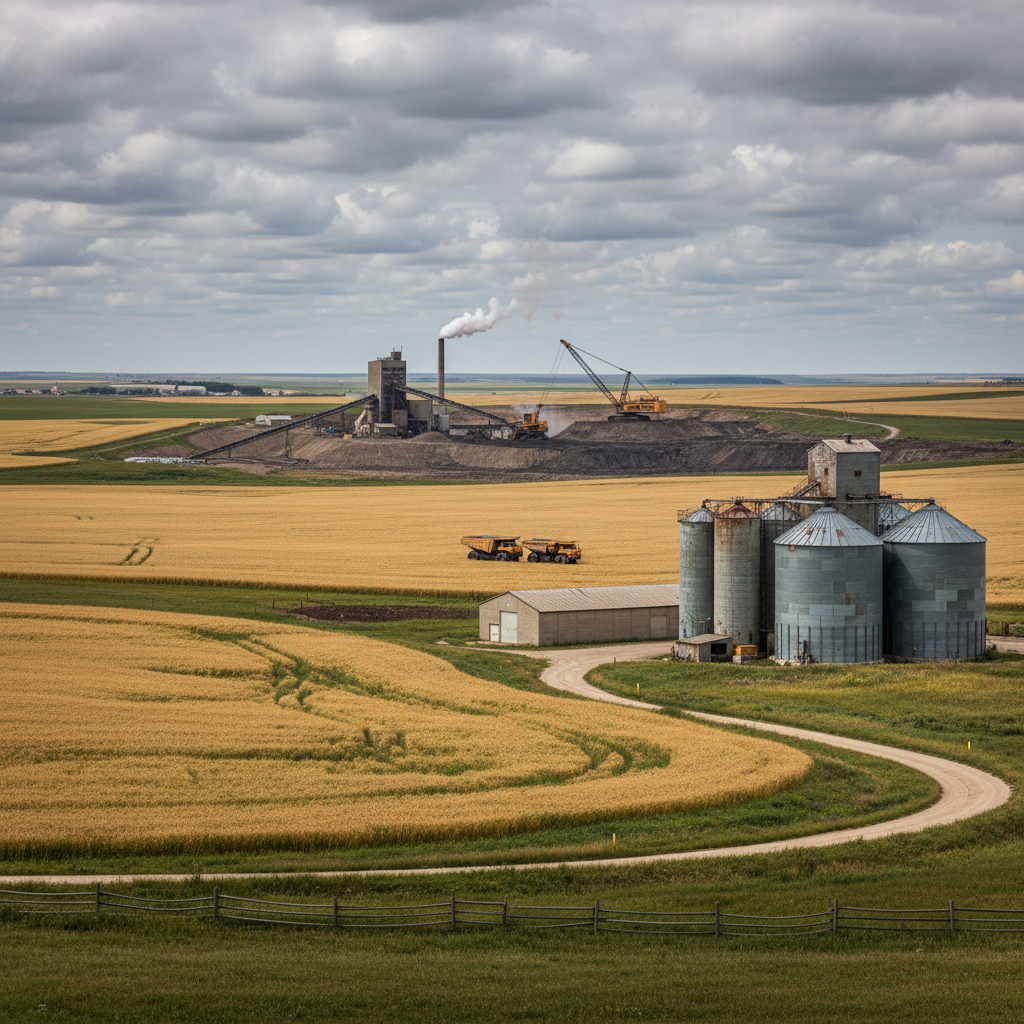
Saskatchewan’s economy remains dominated by traditional industries. These sectors are navigating mixed conditions in 2025, influenced by external price movements and geopolitical tensions.
- Agriculture, especially wheat, barley, and canola, is seeing stable demand, though margins are compressed by higher input and fuel costs.
- Potash and uranium mining continue to perform well due to global shortages and demand for fertilizers and nuclear energy components.
- Oil and gas, particularly in the southeast, benefit from elevated global prices, although regulatory and logistical challenges persist.
- Emerging clean energy projects are gaining traction, especially solar and bioenergy initiatives in rural communities.
Investor Sentiment: Grounded in Fundamentals
In Saskatchewan, investors—both institutional and private—tend to take a long-term, fundamentals-based approach. Still, shifts in Dow Jones Futures provide an early signal of global economic health and sector momentum.
- The AAII Investor Sentiment Survey in the U.S. remains near 45%, and Saskatchewan investment advisors are mirroring this cautious optimism.
- Investment interest remains strong in energy stocks, commodity ETFs, and inflation-protected securities.
- Capital remains cautious toward retail and discretionary sectors, which continue to lag in the province’s economic rebound.
7 Dow Futures Trends Saskatchewan Should Watch in 2025
As Saskatchewan investors position for the rest of the year, these predictive insights will shape how portfolios respond to evolving market conditions. Futures traders across the region should be ready for continued shifts.
- Volatility tied to global trade or central bank decisions could push commodity-linked equities and currencies into sharp daily movements.
- A Fed rate cut may improve access to financing and reduce cost burdens for agriculture and energy producers.
- Tariff-driven inflation could raise prices on farm machinery, fertilizers, and building materials.
- Sector divergence is likely to continue: mining and energy may outperform, while retail and services grow at a slower pace.
- Currency fluctuations will directly impact export competitiveness, especially for Saskatchewan’s grain and mineral shipments.
- Labor market shortages, particularly in skilled trades and rural areas, remain a challenge to expansion.
- Investor behavior will be shaped by U.S. earnings reports, geopolitical risks, and inflation data—all reflected in Dow Jones Futures activity.
Strategic Advice for Saskatchewan Investors
To stay resilient in this complex market, Saskatchewan investors should continue leveraging the province’s natural resource strengths while adapting to global financial shifts.
- Consider diversified exposure to energy, agriculture, and mining sectors—especially through Canadian and U.S.-linked ETFs.
- Use Dow Futures as a tool to track sentiment shifts and anticipate sector performance.
- Pay close attention to Fed and Bank of Canada policy updates and their downstream effects on interest-sensitive industries.
Saskatchewan’s 2025 Outlook: Resource Strength Meets Global Volatility
As a province built on exports and resource wealth, Saskatchewan remains well-positioned for growth—but vulnerable to global fluctuations. Dow Jones Futures are offering an early glimpse into those global headwinds and tailwinds. For local investors, producers, and policymakers, success in 2025 will depend on staying informed, balancing risk, and aligning strategies with both provincial strengths and international realities.