- calendar_today August 15, 2025
.
Erik Menendez was denied parole by a California parole board this week after spending more than three decades in prison. Board members said Erik, who was convicted in 1993 of killing his parents with his brother Lyle, still presents “an unreasonable risk to public safety.”
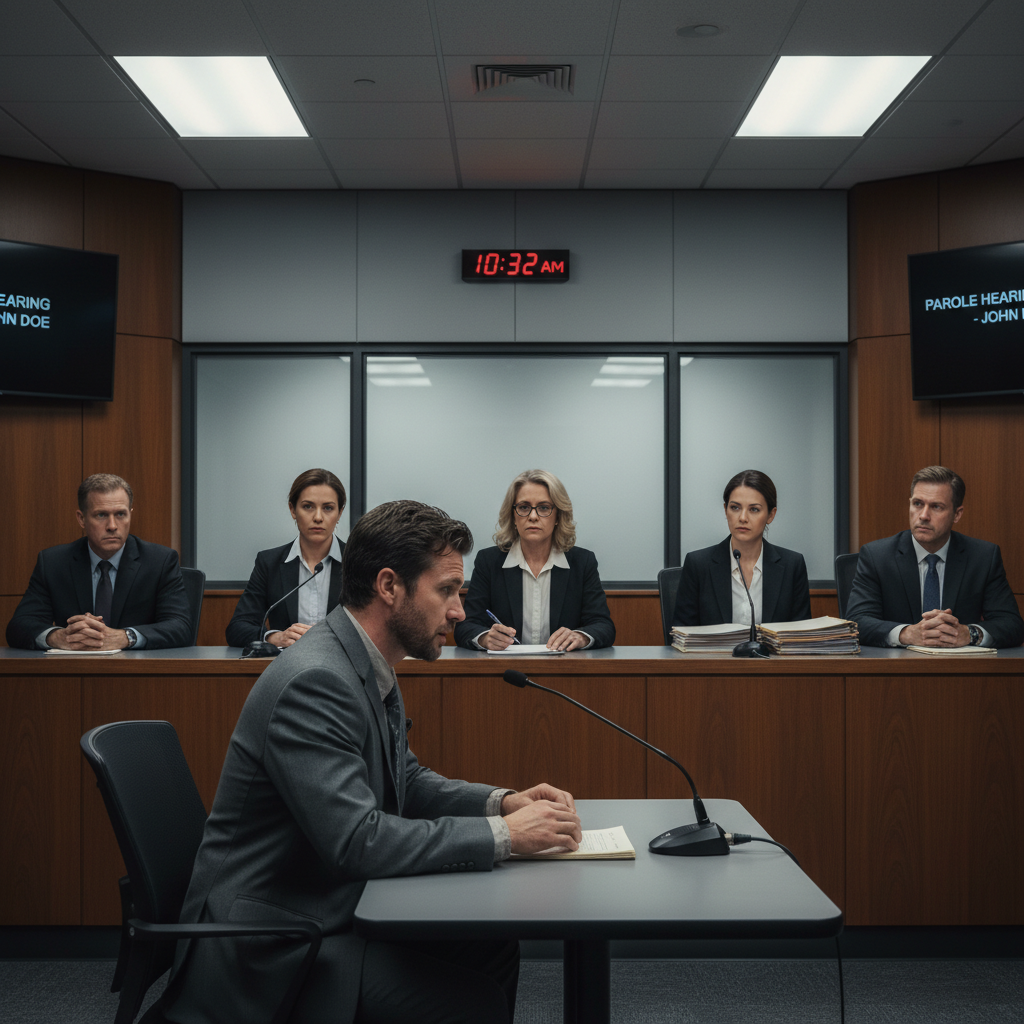
The parole board’s ruling followed a nearly 10-hour hearing that scrutinized Erik’s rehabilitation efforts, behavior in prison, and the case both for and against his release. Prosecutors from the Los Angeles County District Attorney’s office pressed the panel to deny his request for parole, and over a dozen relatives testified on his behalf. In the end, the board agreed with prosecutors, citing Erik’s juvenile criminal record, the circumstances of the crime, and “serious violations” in prison.
In his 50s, Erik will next be eligible for parole in three years. The panel’s Parole Commissioner Robert Barton told Erik that the decision was not only a reflection on the original murders, but also his behavior since then.
“You can present a risk to public safety in many ways, through various types of criminal conduct, including the types you engaged in while you were in prison,” Barton said. He encouraged Erik to make greater use of his “great support network” to ensure that he didn’t repeat those violations.
Erik has racked up nine rule violations since his imprisonment, from drug infractions to possessing banned items like a cell phone and lighter. Several prison officials have sent letters vouching for him as a “model inmate,” but Barton pressed Erik on the incompatibility between that label and his disciplinary history. Erik replied that he only started thinking he could leave prison last year, and that he developed “consequential thinking” only then.
Relatives who spoke during the hearing were tearful, some breaking down as they spoke about how the murders have hurt the family over the last 35 years. Many of them touched on forgiveness during their remarks. “To say that our family has experienced pain does not quite capture what the last 35 years have been like,” said Tiffani Lucero-Pastor, a great-niece of the brothers’ mother, Kitty. “It has divided us. It has caused us panic and anxiety.”
Others addressed Kitty’s alleged inaction in the face of the physical and sexual abuse that her sons said she allowed to continue in the home. Karen Mae Vandermolen-Copley, Kitty’s niece, said her aunt’s “absence of protection deepened their fear and confusion.” The only family member known to oppose Erik’s parole was Kitty’s brother Milton Andersen, who died earlier this year.
The family released a statement after the parole board’s decision expressing their disappointment, but respect for its ruling. “Our belief in Erik remains unwavering,” the statement read. “His remorse, growth, and the positive influence he’s had on others speak for themselves. We will continue to stand by him and hold to the hope that he can return home soon.”
Brother Lyle to Face Parole Hearing, Governor Can Overrule
While Erik was denied parole, his older brother, Lyle, is scheduled for a parole hearing before the board later this month. The three-member panel will convene on Friday to review Lyle’s record of rehabilitation and conduct in prison, similar to Erik’s hearing. While Lyle’s disciplinary record is slightly spottier than Erik’s, the circumstances of the killings may loom large as the board weighs his fate.
In the 1993 trial, Lyle testified that he shot his parents multiple times at close range with a shotgun. He also gave inconsistent testimony about their father’s abuse of the family and his mother’s alleged inaction, even asking his girlfriend to lie to a prosecutor and say their father drugged and raped her. During the hearing this week, Barton noted that the nature of their mother’s death was “devoid of human compassion.”
Lyle has since admitted to lying on the witness stand about his mother’s alleged abuse, but this may not be enough to assuage the board. “The most important thing they do is try to divine a measure of the inmate’s current psychological fitness, and one way to do that is to look at patterns of conduct,” Loyola Law School professor Christopher Hawthorne told The Marshall Project. “If the inmate has lied to the board before, they are going to be leery of believing what they say.”
Lyle has the support of many of his relatives, most of whom will speak on his behalf on Friday. But like Erik, he may ultimately not be up to the governor himself. Gavin Newsom has the authority to accept, reject, or modify the parole board’s decision under a state law passed in 1988. The board’s decision will now be subject to an internal review lasting up to 120 days, after which Newsom has 30 days to act.
As Hawthorne noted, however, it’s a notoriously difficult path to parole. California governors have historically been highly averse to approving parole for high-profile inmates. “Every governor is fairly allergic to releasing high-profile defendants,” he said. Former governors Pete Wilson, Gray Davis, and Arnold Schwarzenegger let almost no parole cases for such individuals go through. But Brown and Newsom have made parole far more likely in the past decade.
The Menendez brothers, however, may still be an exception, as their notoriety casts them into the upper echelon of high-profile cases. As Hawthorne put it, “The governor has to weigh public safety and whether or not someone demonstrates genuine insight.”
In the meantime, Erik remains in prison, with his next chance at parole at least three years away. Lyle will soon find out whether his case goes in a different direction or whether both will remain in prison for the rest of their lives.