
- calendar_today August 17, 2025
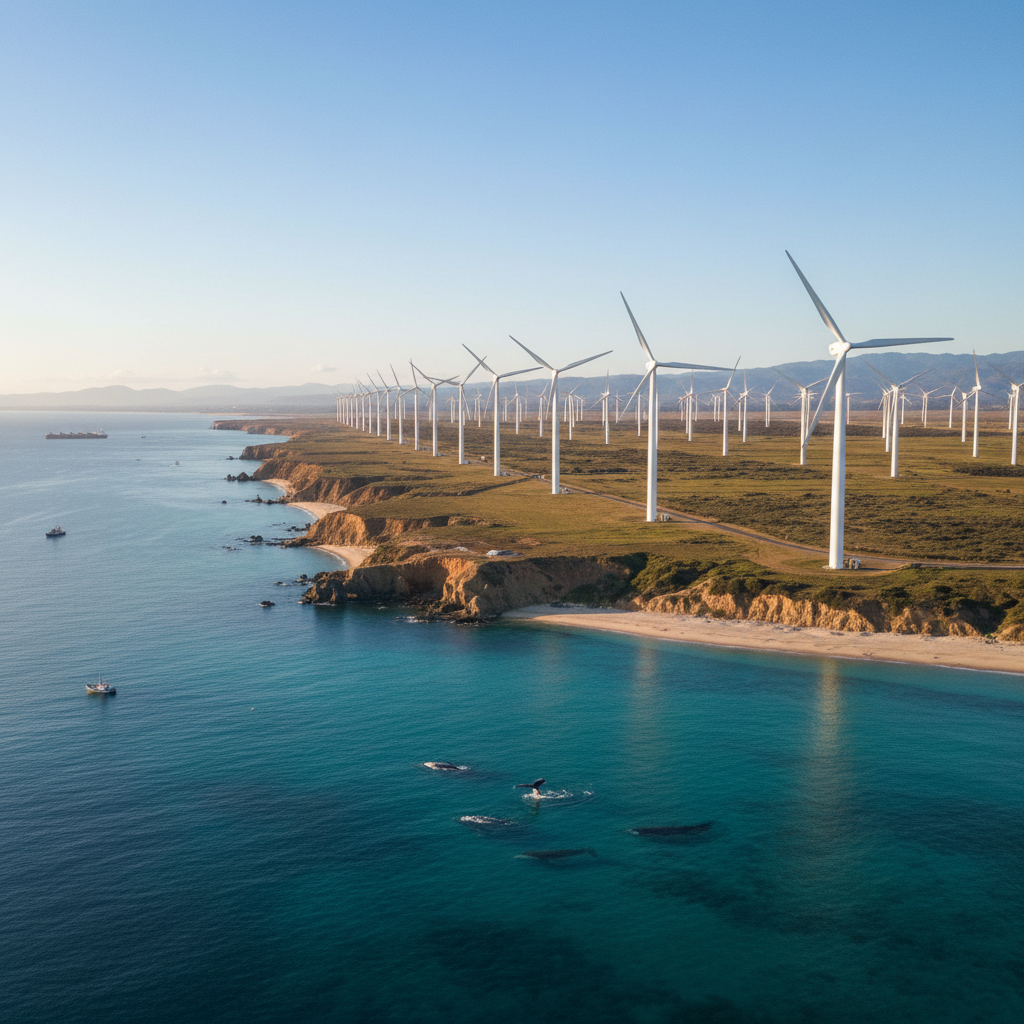
As U.S. President Donald Trump took to the stage to deliver what he promised would be a press conference about a new European Union trade deal, he once again found his way to a subject near and dear to him: renewables. As is his style, he brought along colourful language and even more outlandish claims. Wind turbines, he said, were a “con job” that drives whales “loco,” kills birds, and even risks human lives. The statements were as theatrical as Trump’s other recent climate denials, and they were treated as such in the press.
Taken in isolation, Trump’s speech might seem like an attention-grabbing blip. But in fact, it represents one thread in a global tapestry of conspiracy theories about renewable energy. Windmills, which Trump repeatedly called during the speech, have been the particular focus of this conspiratorial subculture, which also has deep roots in Australia.
I have studied the arguments of anti-renewable activists for some time, and the basic logic of these suspicions is nothing new. Trump’s hyperbolic language aside, the emotional well that activists have been drawing from for years is long and deep.
Opposition to Wind Energy Is Bigger than Donald Trump
The history of anti-wind power conspiracies has a long and winding history. The former president himself frequently uses the term “windmill” when he is talking about wind turbines. While this rhetorical trick has its roots in coal country, in recent years it has become a kind of shorthand among climate deniers and conspiracists for all forms of renewable energy.
But before windmills or wind turbines existed, there was another kind of moral panic that stoked fears about new technology. It was suggested that telephones could carry diseases, sparking a public backlash. Sound familiar? While the two conspiracy movements are obviously from different eras, there are striking parallels. In both cases, new technologies are seen as imposing a way of life on people, while serving the needs of a wealthy few.
Academic research also bears this out. There is a deep psychological divide between those who fear and resent wind farms and those who see them as a means to cleaner, cheaper, and more equitable energy. A 2014 paper led by Kevin Winter found that while demographic factors were not strong predictors of wind farm opposition in Germany, conspiracy thinking was a major one. Age, gender, education level, and political orientation did not matter nearly as much.
The paper’s findings have been borne out in many studies since, including more recent surveys in the U.S., U.K., and Australia. In all cases, respondents who had a higher tendency to believe in conspiracy theories—be they about climate change, government control, or energy security—were more likely to rate wind turbines as a risk.
As for anti-windfarm activism, experts have found that conspiracy theories are less likely to change with exposure to facts or disclaimers from government and industry. Telling people that wind turbines do not poison groundwater or trigger mass blackouts is unlikely to change their minds because, in many cases, the resistance to wind farms is rooted in a worldview. The evidence is “unlikely to change the minds of those who oppose wind projects as these views are often rooted in people’s worldviews,” Winter and his coauthors wrote.
Wind farms are a conspicuous symbol for many of these issues. On the one hand, supporters of wind and solar see them as a vital part of an energy transition. For opponents, they are a symbol of loss of control and government overreach. The size and number of turbines, in particular, are more than just visual clutter. They become metaphors for other concerns. What Trump calls a “con job” is to them a serious challenge to their worldview, identity, and way of life.
The roots of that identity are not only in demographics or in a struggle over energy policy. On a more existential level, fossil fuels powered a long era of wealth, and for some, an unwillingness to acknowledge the true environmental and social cost is akin to denying that past. In academic parlance, this is sometimes called “anti-reflexivity.” The former president’s language—often explicitly nostalgic for the days of coal, oil, and gas—fits firmly into this category.
On a similar note, there is a growing body of work on identity politics online that challenges perceptions about climate change. In the manosphere—a constellation of online communities for men that are united by a general antipathy toward women—climate concerns are openly ridiculed and derided as feminine and weak.
The drive to renewables feels like a crisis of meaning for many baby boomers, particularly white heterosexual men. It upsets a status quo in which their dominance of the world around them once felt unquestioned. Accelerating the uptake of clean energy is not just about changing technology but about changing culture.
In short, Trump’s rhetorical flourishes against “windmills” and their supposed impacts speak to a large audience of voters for whom the energy transition represents loss of control, government overreach, and changing social values. Trump’s rhetoric echoes with his supporters because he is singing the same tune that has been going on for decades.


