- calendar_today August 14, 2025
.
EV sales in the United States are growing at a slower pace than they have been. After almost a year and a half of month-over-month increases in EV sales, there has been some contraction. Brands like Genesis and Volvo have already felt buyers walk away from their EV lineups, and both have announced lineup changes in response.
Confused policy from the current US administration hasn’t helped, as subsidies have been reduced and regulations on vehicle pollution have been reversed, leaving fewer federal buyer incentives than in the past. However, new market research suggests that there may be a larger problem with US EV adoption: where people park their cars.
Charging At Home
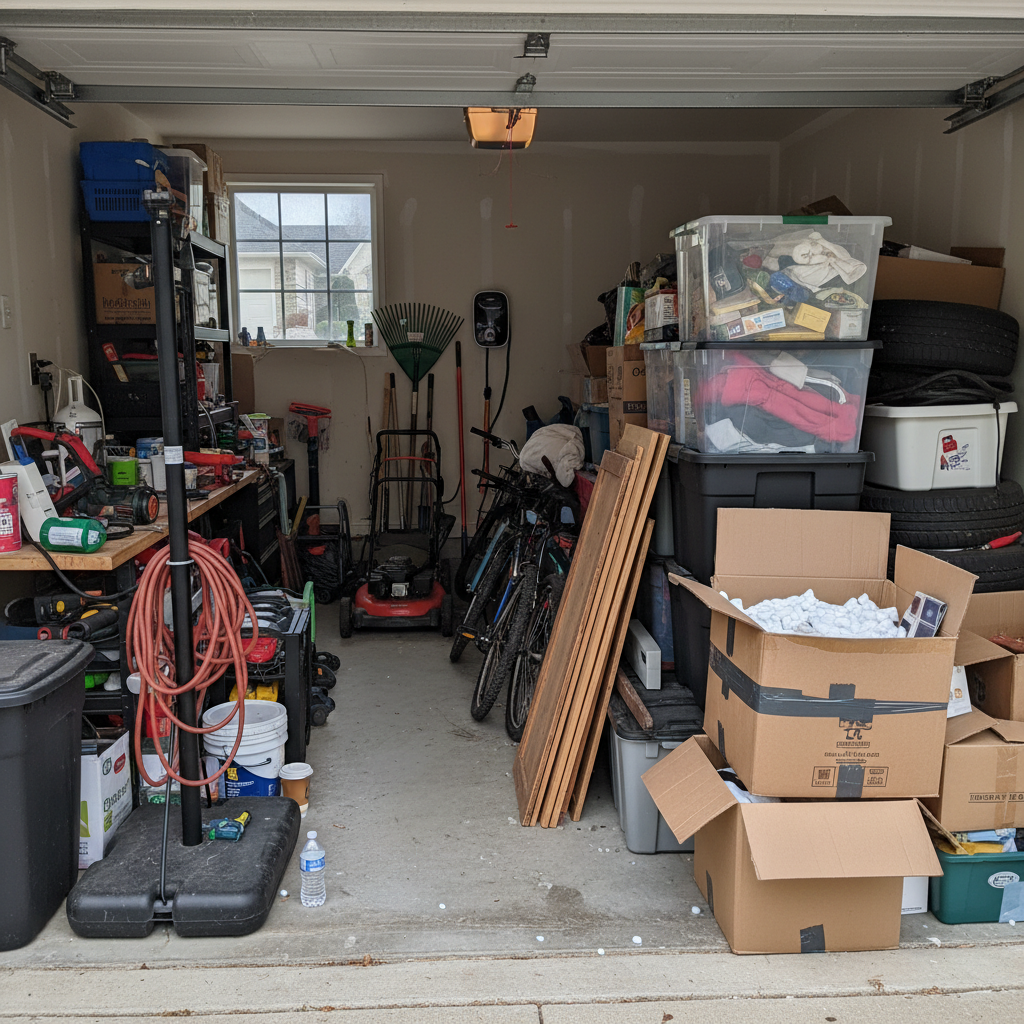
Range anxiety has been at the top of concerns for potential EV buyers for years, and questions around charging are the leading factor limiting adoption. In new research from Telemetry, Vice President Sam Abuelsamid dug into the factors limiting charging at home and found an unexpected bottleneck: garage clutter.
The vast majority of EV charging still takes place at home, despite the media attention that the buildout of DC fast chargers has been getting over the past few years. It is estimated that 80 percent of all EV charging in the United States is still AC power, primarily at a single-family residence. According to data from the National Renewable Energy Laboratory (NREL), 42 percent of US homeowners already have the capability to charge at home if they parked within reach of an outlet supporting 240-volt (level 2) charging.
That number could increase sharply, to 68 percent, if Americans cleared space in their garages and shifted their parking habits. As Abuelsamid explained in his report, “90 percent of all houses can add a 240 V outlet near where cars could be parked. Parking behavior, namely whether homeowners use a private garage for parking or storage, will likely become a key factor in EV adoption.”
Garage space is an important factor. Homes with an accessible 240-volt outlet are already more than 31 million, according to NREL. If Americans shifted their parking habits and stopped using their garages for storage, that number could more than 50 million, or two-thirds of all households. If new wiring was completed in homes where an outlet is not close to parking, then the total jumps to over 72 million.
That number is already higher than Telemetry’s high end EV adoption forecast for 2035 of 33 million to 57 million vehicles. However, being able to support charging on paper does not always equal being ready to charge. The same NREL report found that 33.7 million homes would still need an electrical upgrade, a fairly expensive investment, to support a level 2 charger. These chargers draw a minimum of 30 amps, requiring new wiring and outlets that can reach the car. Upgrades can range from $2,500 to several thousand dollars if a whole panel needs to be replaced.
What is even more painful for potential EV buyers is that the cost of installing charging infrastructure can quickly eat into EV’s touted long-term affordability. With the cost of chargers added to the cost of the car, the total cost of ownership of an EV can approach or exceed that of a gas car.
The Problem With Apartments
The issues get even worse for the 23 percent of Americans who do not live in single-family homes but rather multifamily structures such as apartments, condos, or townhomes. As with charging at home, the cost and availability of chargers are a significant concern for these homeowners. However, in multifamily units, EV owners are rarely empowered to just install their own chargers; instead, they need the cooperation of landlords, management companies, or co-op boards. Getting that approval can be difficult or even impossible.
As for cost, installing even two level 2 chargers to share at a co-op or rental complex will often require an expensive upgrade to the electrical panel first. That project alone can easily cost millions of dollars in a multi-unit structure, without accounting for the need to run wiring to parking spaces potentially far from the building’s electrical distribution system. Renters are also usually not eligible for the same municipal and utility discounts and rebates available to homeowners.
As it stands, some one million EV owners are in multifamily housing. Of those, only 11 percent park close enough to an outlet to charge at home. Although some states require 20–25 percent of spaces in new projects to be EV-ready, Telemetry estimates that by 2035 there will only be between 6.7 million and 11.4 million charging-capable spaces in multifamily dwellings. That’s well below the expected adoption for the category.
The Public Charging Divide
This leads to another important question: will the public charging network be able to make up the difference? Based on estimates of EV adoption and public charger availability, Telemetry estimates that between 11.7 million and 14.3 million EV drivers who own houses in the United States will still be using public charging by 2035. An additional 7.8 million to 8.1 million EV owners who live in multifamily residences will also be using public charging.
Satisfying this demand will require between 523,000 and 586,000 DC fast chargers to service the one million or so multifamily residents who don’t have home charging. An additional 1.5 million to 1.6 million level 2 chargers would be required to meet overall national demand. However, building that capacity may be a challenge on its own. Distribution and generation capacity on the grid is already strained by new high-consumption facilities such as AI data centers, which are competing for the same buildout of large public charging sites.
EV optimism in the US may be premature, then. While there are enough houses technically equipped for EV charging, the adoption of those vehicles is not a given, and there are several factors to that could hold back the shift. Garage clutter and high electrical upgrade costs are as much a barrier to adoption as is the difficulty of multifamily living. And even if the public charging network expands at the high end of forecasts, it may not be enough to keep up with demand in the next decade. For now, one thing seems certain: the future of EVs in America will likely depend as much on the state of homeowners’ garages as it does on government policy or automakers’ plans.