- calendar_today August 9, 2025
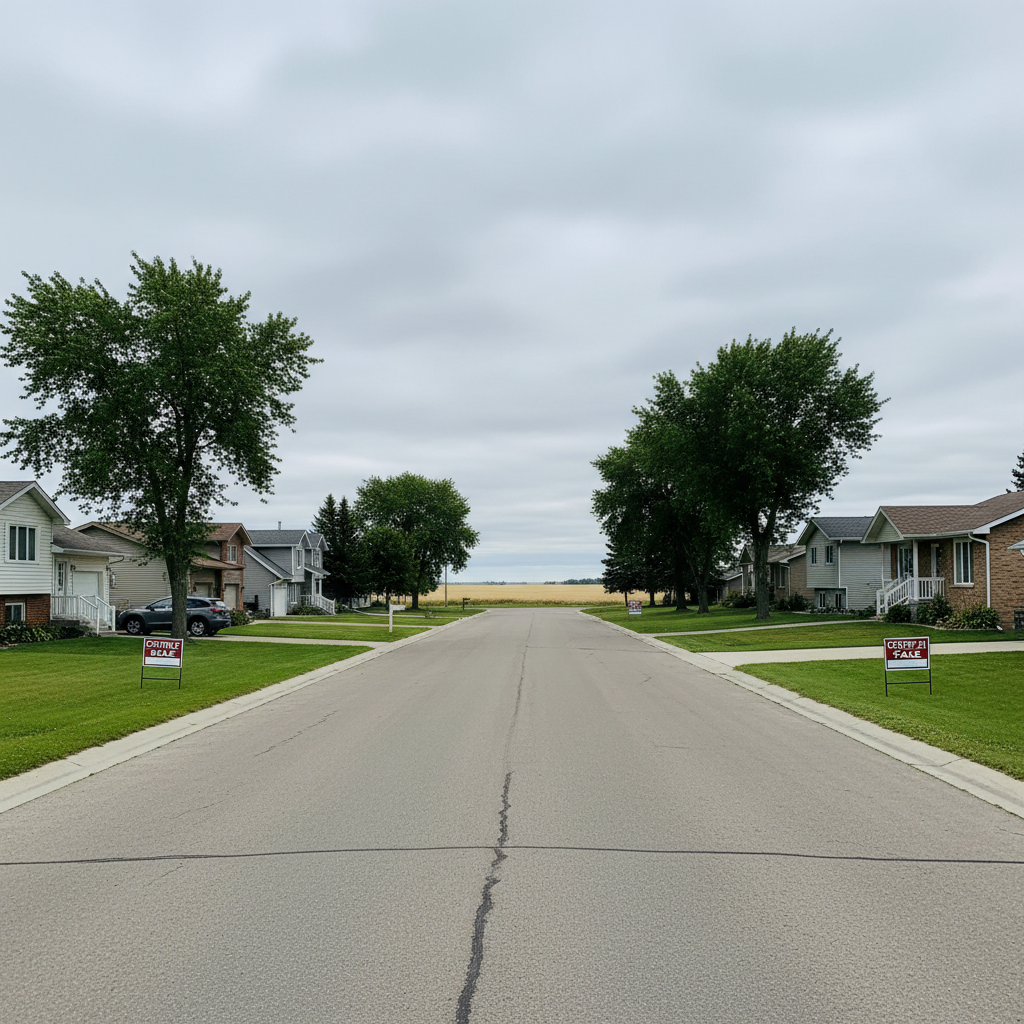
As of mid-2025, Saskatchewan’s housing market—long considered one of Canada’s more stable and affordable—has entered a period of stagnation. Despite avoiding the intense speculative bubbles seen in Toronto or Vancouver in recent years, Saskatchewan is still grappling with the consequences of rising interest rates, tighter mortgage conditions, and economic uncertainty.
The province’s two major urban centres, Regina and Saskatoon, are showing visible signs of slowing market momentum. What was once a modest but dependable growth environment has become a cautious and increasingly inactive landscape.
Higher Interest Rates Reshape Buyer Psychology
At the core of Saskatchewan’s housing market freeze lies the Bank of Canada’s prolonged interest rate hike cycle. Although rate increases began in 2022, their cumulative impact has fully materialized in 2025. Mortgage rates have hovered around 6%—a significant jump from the sub-3% loans seen just a few years ago.
For first-time buyers and move-up buyers alike, this change has been jarring. Monthly mortgage payments are substantially higher, and lenders have become more conservative in their qualification processes. With homeownership no longer easily within reach, many would-be buyers are staying on the sidelines or turning to rentals, which has seen upward pressure on prices.
Inventory Grows, But Buyers Are Scarce
In previous years, low inventory helped support pricing in Saskatchewan, especially in key urban and suburban areas. That trend has now reversed.
In Regina and Saskatoon, the number of active listings has increased by 18% and 21% year-over-year, respectively. This rise isn’t due to a development boom—it’s a reflection of homes sitting longer on the market without movement. Sellers, reluctant to slash prices, are finding themselves in a holding pattern, while buyers remain hesitant, unsure if prices will drop further.
“There’s been a real psychological shift,” said a Saskatoon-based real estate agent. “Buyers are cautious, almost fearful, and sellers are clinging to 2022 valuations.”
Regional Disparities: Rural vs. Urban Dynamics
While Saskatchewan’s housing market freeze is evident province-wide, the impacts vary depending on the region. In smaller towns like Prince Albert and Moose Jaw, the market slowdown has been more dramatic. These communities rely heavily on agriculture, mining, and energy—all sectors facing volatility in 2025.
Property sales in rural areas have declined by over 30% in some districts compared to the same period in 2024. Some homeowners are pulling listings altogether, unwilling to sell into a stagnant market with limited demand.
Meanwhile, urban areas like Saskatoon are holding up slightly better, with price declines averaging 4–6% year-over-year. The presence of universities, hospitals, and diversified employment has cushioned the fall, but not reversed it.
Construction Activity Slows as Builders Retreat
Homebuilders, once bullish on Saskatchewan’s affordability appeal, are hitting the brakes. Housing starts across the province have fallen by nearly 25% in the first half of 2025, according to data from the Canada Mortgage and Housing Corporation (CMHC).
Developers are wary of launching new projects in a climate where pre-sales are stalling and financing is harder to secure. Projects that broke ground in 2023 or early 2024 are still underway, but new proposals are being shelved or downscaled.
This retreat could create a supply-demand mismatch in the long term, but for now, it’s contributing to the overall sense of freeze.
Renters Face Collateral Pressure
With more would-be homeowners unable to qualify for mortgages, demand for rental properties has spiked—especially in Saskatoon and Regina. Vacancy rates have tightened to below 2%, and average rents have increased by 7% since January 2025.
Landlords are benefiting from the shift, but affordability concerns are growing among tenants, particularly those on fixed incomes or in the student housing segment.
“The rental crunch is real,” said a Regina property manager. “We’re at full capacity and getting multiple inquiries for every new listing.”
Government Incentives and Market Response
In response to the freeze, Saskatchewan’s provincial government and local municipalities have begun rolling out modest housing incentives. First-time homebuyer grants, down payment assistance programs, and property tax deferrals are being piloted in key cities.
However, their impact remains limited. Market analysts suggest that unless interest rates begin to fall or consumer confidence rebounds, these measures may not be enough to stimulate activity in the short term.
What Lies Ahead?
Industry experts are split on whether Saskatchewan’s housing market will thaw before the end of 2025. Some are hopeful that by Q4, modest interest rate cuts could rekindle demand, particularly if inflation remains under control.
However, others warn that the broader economic picture—job growth, wage stagnation, and global supply chain pressures—could prolong the freeze well into 2026.
Despite the challenges, Saskatchewan remains one of Canada’s most affordable housing markets, a factor that could play in its favour once conditions improve. Until then, both buyers and sellers may need to reset expectations.
Final Thoughts: A Market in Waiting
The 2025 housing market freeze in Saskatchewan isn’t rooted in panic or collapse—it’s a reflection of uncertainty. The fundamentals of the province’s housing economy remain intact, but the environment is simply not conducive to confident buying or selling.
As both sides of the transaction wait for clearer signals—be it from interest rates, government policy, or consumer psychology—the market is in stasis. What comes next will depend not just on Saskatchewan’s internal dynamics, but on the broader Canadian and global economic context. Until then, the freeze continues.