- calendar_today August 7, 2025
Stillness and Signal – How Saskatchewan Artists Are Using AI Without Losing Their Roots
In Saskatchewan, Artists Are Taking Their Time With AI
Creativity in Saskatchewan moves at its own pace. It’s shaped by quiet mornings, long winters, and prairie resilience. The artists here—whether painting in Moose Jaw, filming in Regina, or weaving stories on reserves—aren’t chasing the next big thing. So when AI in Saskatchewan art entered the conversation, the response wasn’t rejection or celebration—it was reflection.
A songwriter from Saskatoon told me, “I used an AI tool to generate chord progressions once. It gave me something to push against. But the heart of the song still came from a conversation I had with my dad.” That’s the tone you’ll find here—tech can offer a tool, but it’s not the source of meaning.
Filmmakers Are Using AI to Simplify—but Not Replace
The film scene in Saskatchewan is intimate, scrappy, and often fueled by community stories. Many filmmakers are using AI for editing and organization, especially when juggling multiple roles on a small team.
One filmmaker in Regina shared, “AI helped me tag footage and identify sound spikes. That saved hours. But it never touched the emotional cuts. That part takes intuition.” Prairie storytelling has always been about subtlety and honesty—two things AI can’t fake.
Visual Artists Are Dipping In, but Staying Grounded in Place
Visual artists across Saskatchewan, from Prince Albert to smaller farming towns, are starting to use AI tools to explore layout, color, and concept. But the majority say their inspiration still comes from land, memory, or family.
A printmaker in Swift Current told me, “I played with AI to mock up some shapes for a series on prairie storms. It helped me see structure, sure. But the textures, the feeling of that sky—I had to live it to create it.” That connection to lived experience runs deep in this region.
Students Are Using Tech to Ask Big Questions
At schools like the University of Regina and the First Nations University of Canada, students are exploring creative technology in Saskatchewan with intention. They’re mixing AI with Indigenous language preservation, personal narratives, and interactive media—but with constant conversation about ethics and ownership.
One student working on a project in Cree said, “We used AI to organize our audio, but the voice—it still had to come from the community. That’s sacred.” This generation isn’t shying away from the tech—they’re just making sure it stays in its place.
Plenty of Artists Are Choosing to Work Without AI—and That’s Respected Here
Many Saskatchewan artists, especially those working in traditional forms or small-town studios, aren’t interested in AI at all. And around here, that decision is simply part of creative independence.
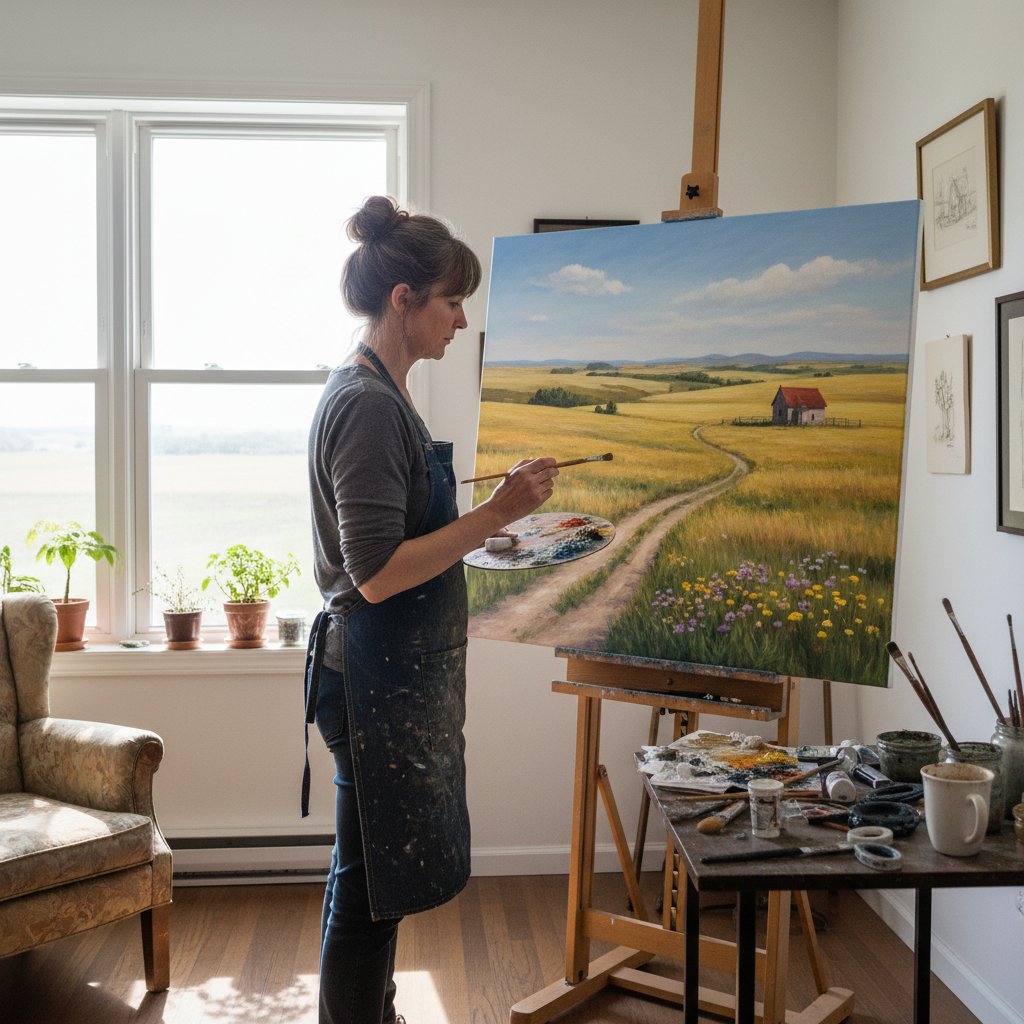
A painter in Yorkton told me, “I don’t need software to tell me where to put light. I need to sit by the window and watch it change.” It’s a simple answer—but one that speaks volumes about where the art really comes from.
How Saskatchewan Artists Are Actually Using AI
• To map ideas – Artists use AI to test design flow or rhythm early in the process
• To save time – Filmmakers and musicians use it to handle editing and transcription
• To explore what-if scenarios – AI is used to generate options, not make decisions
• Never for the emotional heart – The story, feeling, and meaning still come from the artist
Final Thoughts
In Saskatchewan, the sky is big, but the art is close to the ground. It’s personal. It’s patient. And as AI tools slowly enter creative spaces, artists here are making thoughtful decisions about how—and if—they want to engage.
Some are experimenting. Some are opting out. But all are asking the same question: does this help me tell the truth? And if the answer’s no, they’ll leave the tool behind and get back to work the way they always have—honestly, slowly, and rooted in what’s real.