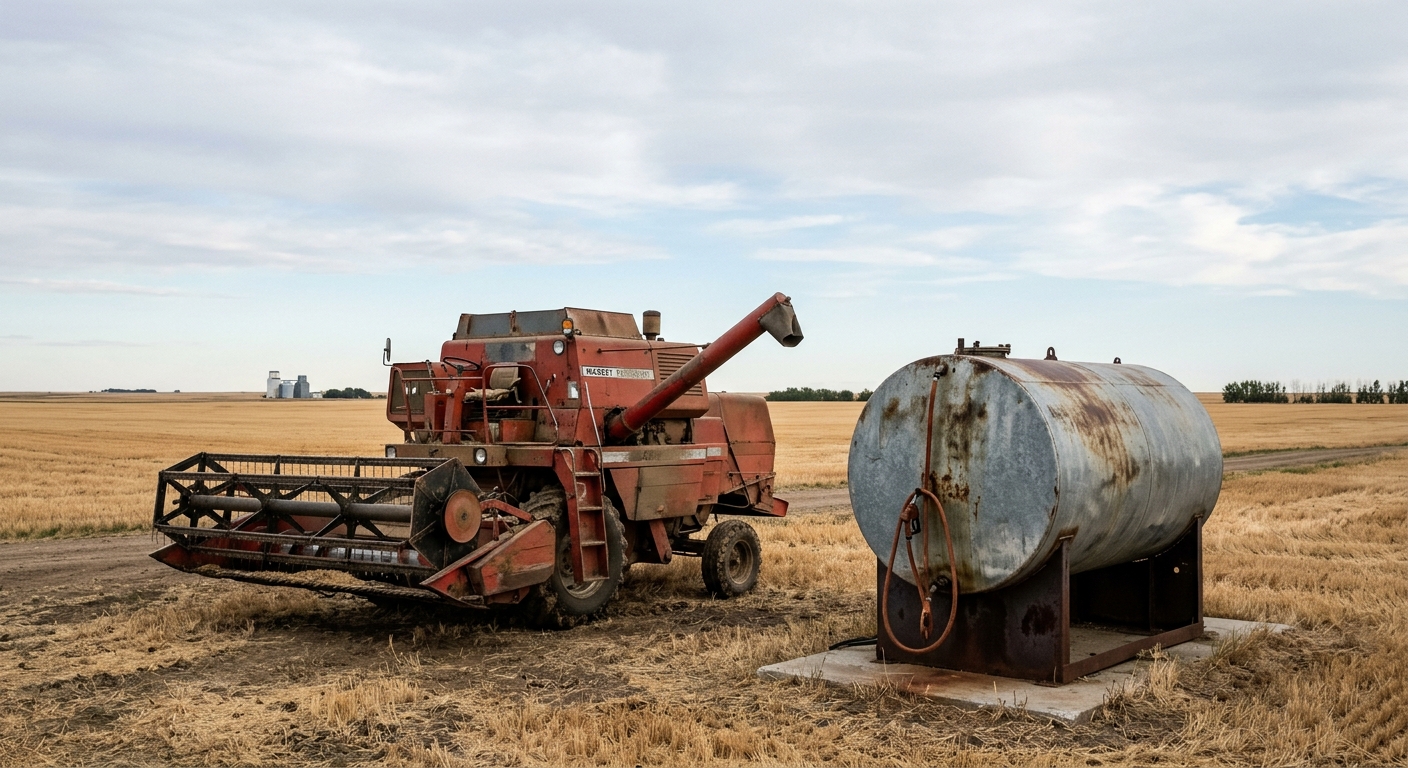
AI-generated illustration; not a photograph of the reported event.
- calendar_today October 27, 2026
Farm Machinery Sales Take a Hit in Saskatchewan
Saskatchewan farmers are facing a difficult financial landscape as sales of farm machinery, including combines and tractors, decline sharply. Rising diesel prices, high interest rates, and stalling commodity prices are contributing to a reluctance among producers to invest in new agricultural equipment, according to Devon Walker, a board member of the Agricultural Producers Association of Saskatchewan.
Industry Reports Show Significant Drop in Equipment Sales
A recent report from the Association of Equipment Manufacturers reveals a considerable decrease in farm machinery sales across Canada. In September 2026, tractor sales were down approximately 15 percent compared to the previous year, while combine sales saw an even steeper drop of nearly 38 percent. These trends are particularly felt in Saskatchewan, where elevated machinery costs are at a record high due to multiple factors, including inflation, tariffs, trade issues, supply chain challenges, and a weak Canadian dollar.
Farmers Extend Equipment Lifespans
Walker notes that the combination of high prices and uncertain returns is prompting farmers to keep their equipment longer than usual. "People are trying to extend the use longer, keep machines longer, run longer hours on them," he said. This shift impacts the equipment market by reducing the flow of used machinery, often purchased by smaller farming operations, and may limit opportunities for those seeking second-hand options.
Rising Diesel Prices Increase Farm Costs
The surge in diesel prices has become a major concern for farmers. According to Graeme Crosbie, a senior economist with Farm Credit Canada, the cost of diesel alone can add up to $20 per acre. On his 3,600-acre farm, Walker reported burning 75,000 litres of diesel to harvest peas, wheat, canola, and barley, resulting in an extra $75,000 spent this season due to higher fuel expenses. For larger farms, Crosbie estimates added fuel costs can range from $70,000 to $100,000, depending on acreage.
Impact on Farm Operations and the Broader Supply Chain
Crosbie points out that increased fuel costs affect more than just the harvest. Transporting grain to elevators and moving livestock to feedlots or markets have also become more expensive, as diesel prices impact nearly every part of the food supply chain. Despite the current challenges and tight profit margins, he believes the sector is not yet facing industry-wide losses.
Farmers Remain Resilient Amid Uncertainty
Saskatchewan producers express determination, though frustrations run high. "It's the case of get the job done or not. So of course you're going to pay the price and get the job done," said Lee Moats, who grows canola, pulse crops, and wheat near Riceton. He emphasized the need to remain flexible in an uncertain environment affected by fluctuating commodity prices and geopolitical instability.
Chansi Bourke, who farms near Osage, shares the difficulty of making operational decisions amid such unpredictability, citing both geopolitical issues and weather variability as challenges. Even so, Moats remains optimistic about his own farm's outlook, noting, "I'm going to say that on our farm, we've never had it so good as we have the last 15 years."
Conclusion
Although rising fuel, equipment costs, and economic uncertainty are putting strain on Saskatchewan's agricultural sector, many farmers are finding ways to adapt, choosing to extend the use of their machinery and persevere through challenging times. Industry experts suggest that, while conditions are difficult, the overall financial position of the sector remains stable for now.
Source: cbc.ca.