- calendar_today August 10, 2025
Saskatchewan’s Housing Market Hits a 2025 Standstill
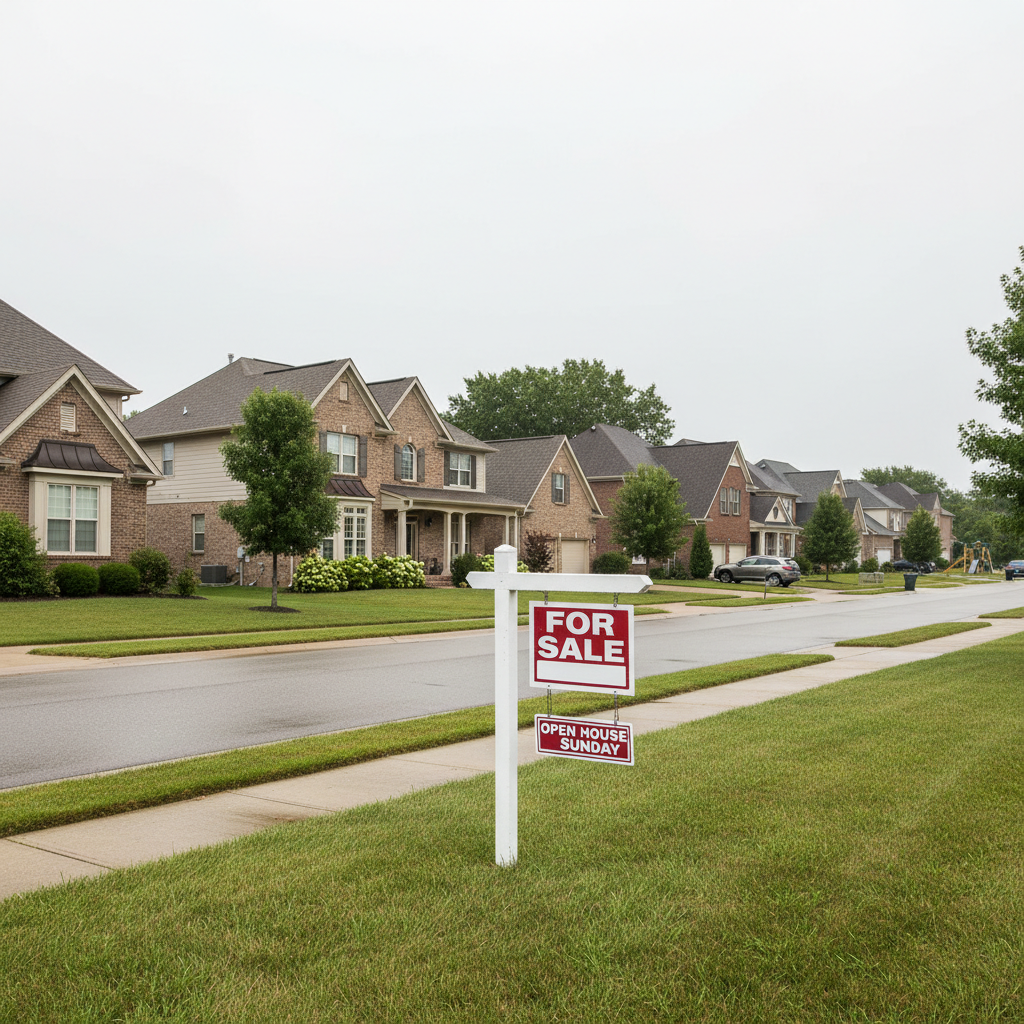
After several years of stable growth, Saskatchewan’s real estate market has entered a pronounced freeze in 2025. The signs are everywhere: fewer homes for sale, stagnant sales activity, and an uneasy stalemate between cautious buyers and reluctant sellers.
Unlike past corrections that brought steep price declines or surging foreclosures, Saskatchewan’s current freeze is defined more by inaction than instability. Market watchers point to a combination of high borrowing costs, shrinking housing stock, and economic hesitancy—particularly in urban centres like Saskatoon and Regina—as the core reasons behind the slowdown.
Here are five key statistics that illuminate why Saskatchewan’s housing market is currently at a standstill and what could spark a thaw later in the year.
Despite the Bank of Canada signaling the end of its aggressive hiking cycle in early 2025, borrowing costs remain stubbornly high. As of July, the average fixed 5-year mortgage rate in Saskatchewan is sitting around 6.9%, nearly double what many homeowners secured pre-2022.
This has created a “golden handcuff” scenario where sellers are holding on to their homes because upgrading would mean sacrificing historically low rates. On the other side, first-time buyers are facing high monthly payments that drastically reduce affordability.
“Even with home prices in Saskatchewan being more modest compared to Ontario or British Columbia, the current rate environment is enough to push many buyers to the sidelines,” said Taylor Friesen, a Regina-based mortgage broker.
2. Active Listings Down 22% from 2024
Inventory is shrinking across the province. According to the Saskatchewan REALTORS® Association (SRA), active residential listings in the first half of 2025 have declined 22% compared to the same period in 2024.
Saskatoon and Regina are seeing particularly low levels of new listings, while secondary markets such as Moose Jaw, Prince Albert, and Swift Current are reporting housing supply crunches not seen in over a decade.
“There’s just not enough movement happening,” said SRA President Jared Schmid. “The listings aren’t coming in, and that makes it hard to build momentum for buyers who are ready to act.”
The impact is a tight, almost gridlocked market in both urban and rural areas—where fewer homes are hitting the market and sales volume has dipped accordingly.
3. Home Prices Remain Resilient—Saskatoon Median at $385,000
Despite the decline in sales activity, prices across Saskatchewan have remained surprisingly stable. The median home price in Saskatoon is holding firm at approximately $385,000, while Regina’s sits near $320,000 as of July 2025.
This resilience reflects the underlying supply issue. With fewer homes being listed and demand still present, prices have not fallen—much to the frustration of those hoping for bargains during the slowdown.
In rural Saskatchewan, prices are flat or slightly up year-over-year, especially in agricultural hubs like Yorkton and Weyburn where demand for acreage and family homes remains consistent.
“This isn’t a crash—it’s a pause,” said economist Rupa Singh from the Prairie Housing Research Council. “Sellers aren’t panicking, and buyers aren’t rushing in. Everyone’s just waiting.”
4. New Construction Permits Down 17%
The construction pipeline has also slowed in 2025. According to Statistics Canada, building permits for new residential units in Saskatchewan are down 17% year-over-year through June.
Developers cite uncertainty around financing, municipal delays, and the higher cost of materials as reasons for scaling back projects. The result is a cooling effect that’s compounding Saskatchewan’s inventory shortages.
“The appetite for risk just isn’t there right now,” said Aaron Liu, a homebuilder in Saskatoon. “We’re holding off on new projects until the rate environment improves or demand picks back up.”
This construction slowdown is particularly worrying for areas outside the main cities, where demand from new residents and growing families is outpacing housing development.
5. First-Time Buyers Losing Ground
Affordability has long been Saskatchewan’s strength, with cities like Regina and Prince Albert often ranking among the most accessible housing markets in Canada. But even here, the 2025 freeze is hitting first-time buyers hard.
Recent data from the CMHC shows that the percentage of first-time buyers in Saskatchewan has dropped from 35% in 2022 to 27% in 2025—a steep fall in just three years.
Higher monthly payments, increased down payment requirements, and limited inventory are the main culprits. Many potential buyers are now opting to rent longer or relocate to even smaller communities.
“The dream of homeownership isn’t dead, but it’s delayed,” said Emma Wills, a real estate agent in Moose Jaw. “People are adjusting their timelines and expectations.”
A Frozen Market, Not a Broken One
While Saskatchewan’s housing market is clearly in a state of deep freeze, experts caution against interpreting the slowdown as a sign of collapse. Unlike past downturns driven by job losses or economic contraction, this one is being caused by broader macroeconomic pressures—namely interest rates—and a mismatch between buyer capacity and seller willingness.
Many believe the market could rebound if key conditions change. A drop in mortgage rates, provincial stimulus, or a strong uptick in immigration could all help reignite activity in late 2025 or early 2026.
“There’s still strong fundamentals here,” said Singh. “Saskatchewan’s population is growing steadily, and housing supply hasn’t kept pace. That sets the stage for renewed demand once financial conditions ease.”
What Buyers Should Watch in Saskatchewan
For those still hoping to get into the market in 2025, timing and flexibility will be key. Here are some Saskatchewan-specific tips:
- Watch Rate Announcements: Any downward shift from the Bank of Canada could open doors to lower mortgage costs.
- Consider Smaller Markets: Places like Humboldt, Estevan, and Meadow Lake may offer better affordability and less competition.
- Negotiate with Confidence: Sellers are motivated, even if prices remain firm. Explore conditions like longer closings or seller-covered closing costs.
- Explore New Builds Carefully: With construction slowing, some developers may offer incentives to move existing inventory.
Looking Ahead: A Cautious Path to Recovery
Saskatchewan’s 2025 housing freeze is unlikely to thaw overnight. But it’s also not a permanent state. Many believe the province is better positioned than others to weather the storm, thanks to its historically balanced housing market, growing population, and economic stability in key sectors like agriculture and mining.
Until interest rates drop or consumer confidence returns, buyers and sellers alike may continue to wait. But beneath the surface, Saskatchewan’s market remains one of Canada’s most quietly resilient.